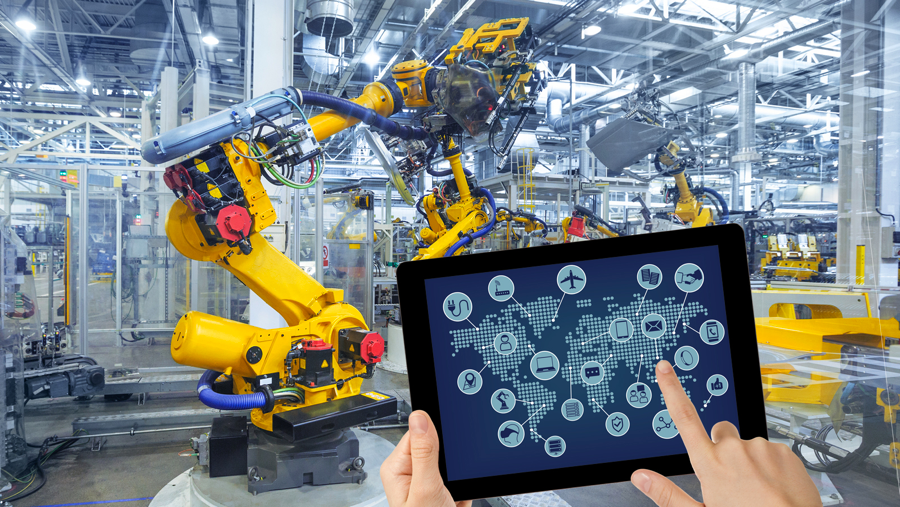





From Cages to Cooperation Traditional industrial robots were dangerous machines that had to be kept behind cages. Cobots (Collaborative Robots) are a different breed. They are designed with advanced touch sensors and AI-vision systems that allow them to work alongside humans safely.
The Human-Robot Partnership
- Dynamic Collision Avoidance: 2027 Cobots use “Depth-Sensing AI” to predict human movement. If you reach for a tool, the robot arm subtly moves out of your path or slows down to avoid contact, making the workspace feel like a choreographed dance.
- Skill Transfer (Learning by Demonstration): You no longer need to write 1,000 lines of code to program a robot. You can simply “lead” the Cobot’s arm through a task—like soldering a chip or painting a cinematic prop—and its AI will memorize the motion, refine it for efficiency, and repeat it perfectly.
- The “Force-Feedback” Assistant: Cobots act as a physical exoskeleton. They can hold heavy components in place with sub-millimeter precision while the human worker performs the delicate high-detail finishing work.