




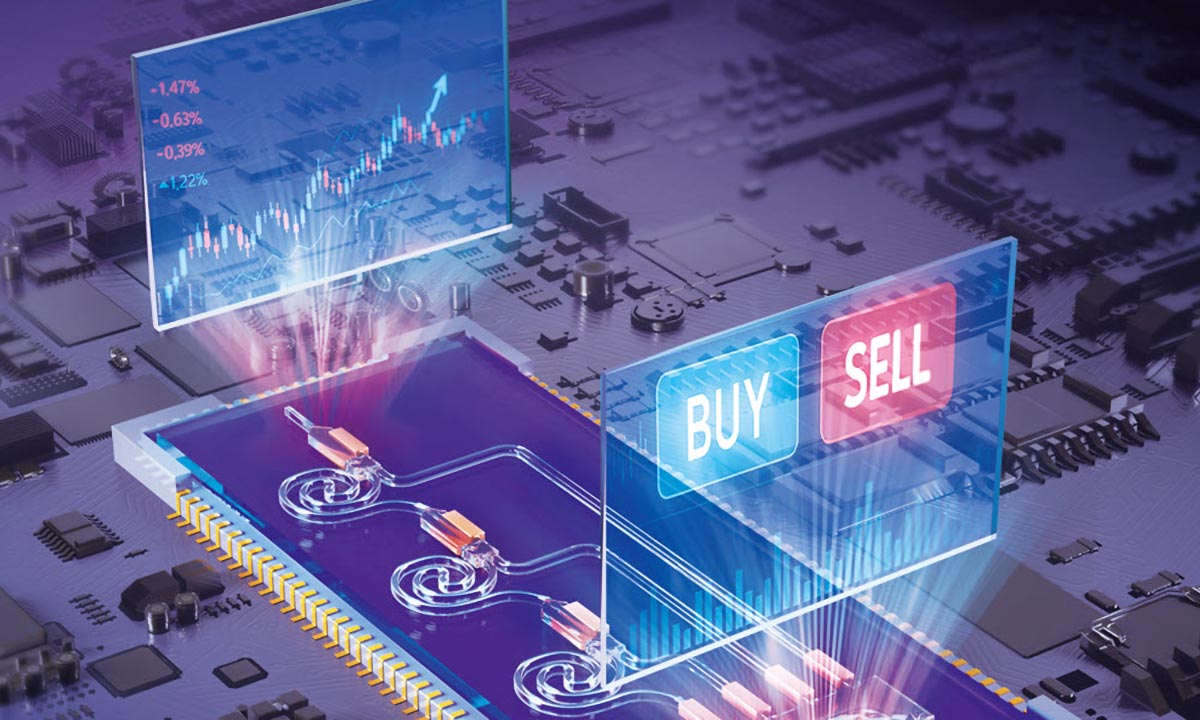
The Heat Wall As we push electronic chips faster, they generate immense heat due to electrical resistance. This is why your laptop fan spins up when rendering high-detail video. Photonic Computing eliminates this problem by using photons (light) instead of electrons to perform calculations.
How Optical Processors Work
- Zero Resistance: Light moves through silicon waveguides without generating heat, allowing for clock speeds that are orders of magnitude faster than current high-end CPUs.
- Parallel Processing: Different wavelengths of light (colors) can carry different streams of data simultaneously through the same path, effectively allowing a single “wire” to do the work of thousands.
- The 2027 Reality: While we aren’t seeing purely optical home PCs yet, Photonic Integrated Circuits (PICs) are now the standard in AI data centers. They handle the “matrix multiplication” tasks required for deep learning at speeds that make current GPUs look like calculators.