



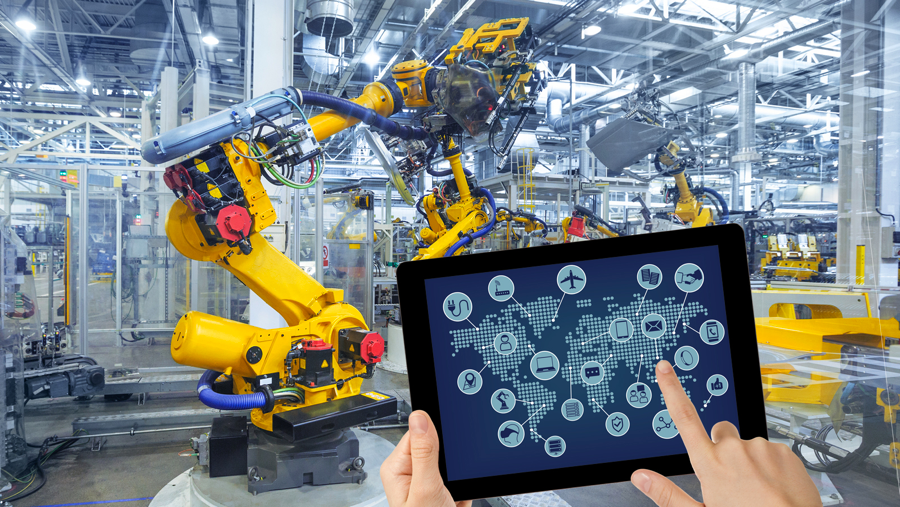
From Automation to Autonomy Industrial IoT 1.0 was about sensors telling us when a machine was broken. In 2027, IIoT 2.0 is about the machine fixing itself—and the entire factory floor reorganizing to meet demand.
The Architecture of the Smart Plant
- Dynamic Reconfiguration: Using modular robotics and 5G/6G “private networks,” factory lines can now physically shift. If an order comes in for a 22-foot house frame followed by a custom automotive part, the robots communicate via a local AIOps agent to swap tools and re-position themselves in seconds.
- Predictive Energy Management: IIoT 2.0 systems are now synced with local renewable energy grids. If a cloud of solar power is coming, the factory “overclocks” its production; during low-energy periods, it shifts to low-power maintenance tasks.
- Zero-Downtime Maintenance: Using vibration sensors and thermal imaging, the IIoT network creates a “Digital Twin” of every motor. It orders its own replacement parts via a TRX/USDT smart contract and schedules a “Cobot” (Collaborative Robot) to perform the repair during a shift change.